
Written by Josh Gold, Published by Aikido Journal
In the world of martial arts, Dan Inosanto is a repository of history as well as history in the making. Most known as Bruce Lee’s training partner, confidante, and the most highly ranked by Lee in his own personal art of Jeet Kune Do, Inosanto’s martial background spans years both before and after his time with the iconoclastic legend. Dan Inosanto’s first introduction to Japanese martial arts began as a boy, studying “Combat Judo” from an uncle who returned from World War II. Because of his father’s respected position within the Filipino-American community in and around Stockton, California, Inosanto was afforded the opportunity to study and train with several of the masters his father befriended and helped.
Over the years, in addition to studying with dozens of masters of Southeast Asian martial arts, Inosanto has also researched several grappling styles such as Japanese Shooto, freestyle wrestling, and Brazilian jiu-jitsu. In recent years, after a meeting arranged by one of his students, legendary action director and fight choreographer, Jeff Imada, Inosanto began meeting with Haruo Matsuoka of Ikazuchi Dojo to study Aikido. In this special interview, Josh Gold caught up with the martial pioneer to hear his thoughts on Aikido and get a sense of where it stands in the context of his vast martial arts experience.
Josh Gold (Aikido Journal): Thank you for joining us today, Guro (Sensei). I thought we could start by having you talk a little bit about your early experiences with Aikido.
Dan Inosanto: My pleasure, Josh. I was first exposed to Aikido when I got a book by Kenji Tomiki. I saw it in 1963 or 1964, and I bought the book right away. Soon after, I picked up another book by Koichi Tohei. I’ve always had this drive to learn about every martial art I can. I think all the arts should be studied.
When was the first time you saw Aikido in person?
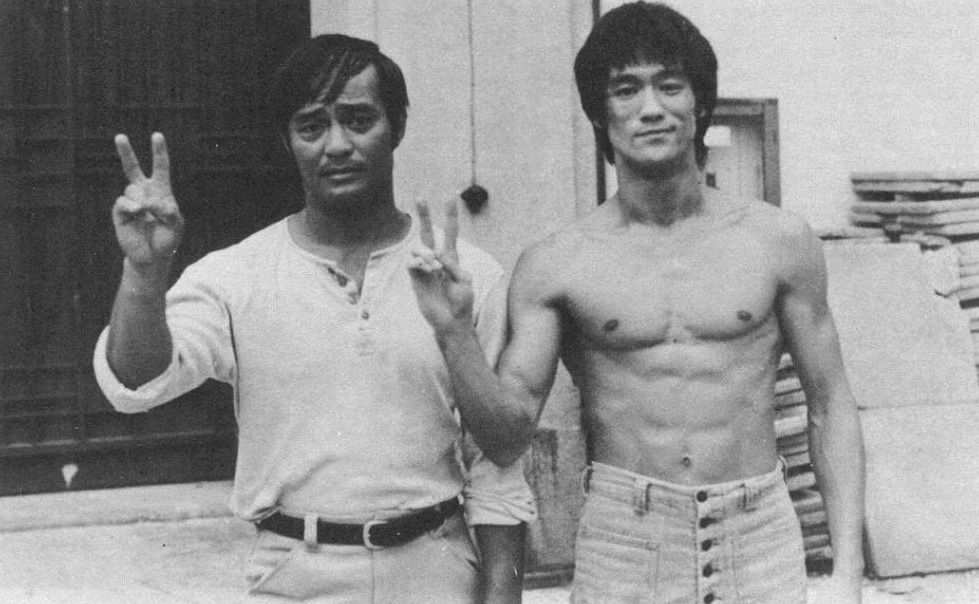
The first time I saw Aikido in person was a demonstration led by Mito Uyehara around 1966. Mito was the founder of Black Belt magazine and he was a 3rd degree black belt in Aikido. He became pretty good friends with Bruce Lee. One day Mito came by Bruce’s house in LA and did an Aikido demo for Bruce and I. I thought “this is pretty good.” I thought it was very interesting. I especially liked the locks and the pins.
You later visited Gozo Shioda’s dojo in Japan, right?
Yes. That was probably sometime between 1989-1991. I went to Japan with Yorinaga Nakamura, who was my shoot wrestling teacher. He brought me to Shioda’s dojo and I really enjoyed my visit there. I was very, very impressed with him. I stayed in his dojo around two hours watching class. I found it very difficult because I was trying to sit Japanese style (seiza) the entire time. I was really hurting (laughs). Yeah, that was really difficult for me.
Did they know who you were?
Yes, they did. When I entered the dojo, I saw some of the Aikido students watching a video of me teaching a seminar. I don’t know where they got it. This was before Internet times, so they had to somehow find a physical videotape. And later on, Shioda told his students, “I think maybe you can learn something from this man.” I was very flattered he would say that to his students. While on that trip to Japan, I was scheduled to teach a seminar. It was mostly focused on Filipino martial arts but we did a little Jeet Kune Do as well. So all these Aikido people – Shioda’s students, ended up coming to my seminar.
I really like the Aikido ukemi system – when I see people like you fall, it’s very soft and very controlled. I had developed this fear of falling after all these years of getting thrown around, so I thought, “I’m going to learn how to fall again.”
Speaking of FMA (Filipino Marital Arts), you once told me a story about one of your teachers, Floro Villabrille and Koichi Tohei.
I don’t know the year, but Tohei had gone to Hawaii to give a series of goodwill demonstrations. He showed the unbendable arm and some joint lock techniques at a demo for a police department. None of the cops could bend his arm. Tohei asked for a volunteer from the audience to try to bend his arm and the crowd yelled for Villabrille, who was watching the demo. By this time, Floro Villabrille had participated in 44 full-contact stick fighting matches in Hawaii. In those contests, you can punch, you can kick, elbow, knee, choke, use takedowns or throws, or just knock the guy out with the stick. Most of Villabrille’s matches ended by knockout with the sticks. Sometimes they ended in submissions or by broken limbs. It was pretty serious stuff.
Tohei tried to apply some techniques to Villabrille, but I guess he, at that time, couldn’t throw Villabrille. That’s the Filipino version of the story, anyway. They went back and forth for a while testing each other but it ended in kind of a draw or stalemate. And then Tohei said to the audience, “This man and I are of the same ability and I cannot throw him.” So Villabrille said, “Let’s do it for real.” Tohei replied by saying, “No, I’m here not for that. That’s not the purpose of Aikido. I’m here to introduce Aikido in Hawaii and that’s my purpose. I’m not here to show that I’m better than, or worse than any man.”
And it’s interesting because Villabrille talked to me about that afterwards, specifically as a character lesson. Villabrille told me that on that day, Tohei was a better man than him because of the way he handled the situation. Later, Tohei gave Villabrille a knife, a Japanese tanto, out of goodwill. And Villabrille showed it to me when I was in there in Hawaii. So he had a very high regard for Tohei.
It’s not just Aikido – even Bruce Lee has been the target of MMA type criticisms on the Internet. Some say, “Well, he was never in a real mixed martial arts match, so you can’t say his skill is good.”
As someone who has incredibly deep knowledge of fighting blades, and quite an extensive collection, I understand you have great admiration for the Japanese tanto.
The tanto is one of my favorite blades, along with the Filipino punyal. I like the blade length of the tanto, and the craftsmanship is excellent. It’s a beautiful and versatile blade. I remember there was a Filipino martial arts practitioner who loved the Japanese sword so much that he practiced his Filipino art with a Japanese sword. I thought that was interesting.
A number of years ago you started your own Aikido practice with my teacher, Haruo Matsuoka. Can you share a little bit about that?
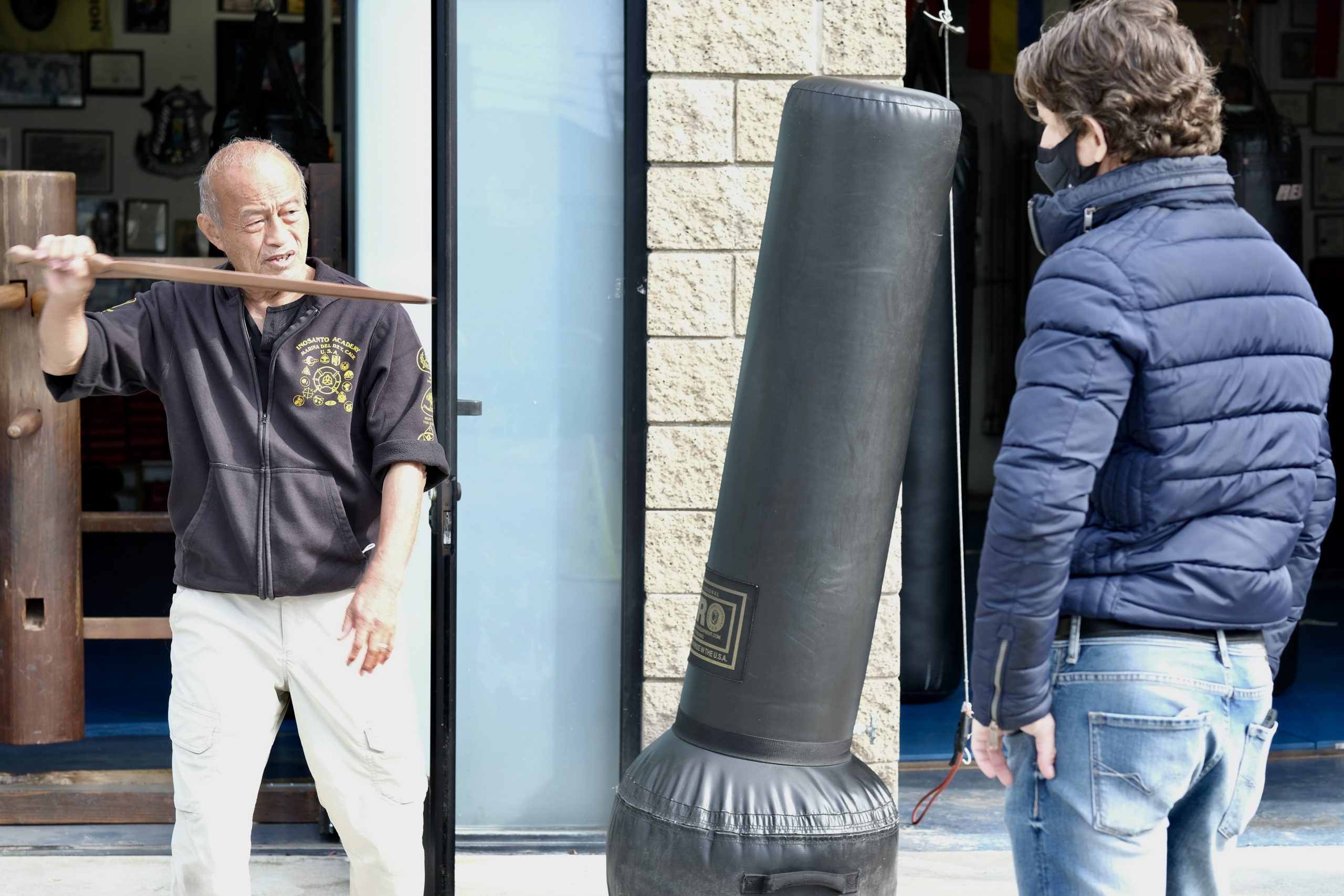
I think I was about 75 years old at the time and realized, “Oh man, I’m scared to fall now.” I’d always admired the falls in Aikido so I asked Jeff Imada to help find me a teacher. Jeff was nice enough to introduce me to Matsuoka Sensei, and that’s when I started to rebuild my rolling and falling skills. I really like the Aikido ukemi system – when I see people like you fall, it’s very soft and very controlled. I had developed this fear of falling after all these years of getting thrown around, so I thought, “I’m going to learn how to fall again.”
I also wanted to just study the art because I thought it would be good for me to learn. The locks and the lock flows (henka-waza / technique transformation) you guys have shown me are really great. I’ve very much enjoyed training with you and Matsuoka Sensei over the years. He’s really an amazing martial artist. Too bad the pandemic got in the way. Aikido was a big thing that I’d look forward to.
For me, martial arts is really about bringing people together.
For me personally, our weekly cross-training sessions with Matsuoka Sensei and Guro Jeff Imada, have been one of the highlights of my martial arts training. I’m so thankful and honored to have had the opportunity to learn from you and share what I can of the art of Aikido. I know Matsuoka Sensei feels the same. He really looks to you as a mentor and is very inspired by you.
Well thank you. I’m glad you’ve enjoyed our cross-training sessions together. I look forward to more of them once we get past this pandemic.
You mentioned that the first time you saw an Aikido demo was with Bruce Lee. What did he think about Aikido?
Well, if I remember clearly, he thought the system was good for dealing with grabs and that it had some powerful joint locks, but he felt it wouldn’t do well against someone who is punching and kicking. He thought the falling techniques were great. Bruce would always analyze the advantages and disadvantages of the arts he researched. As one example, I remember when he looked at Korean karate, he really liked the discipline, kicking skill, and the flexibility it built. But then he’d outline what he saw as the weaknesses of the style – no takedowns, no grappling, and no falling skills. Bruce did this for almost every art that was known at the time.
And by the way, I don’t think the disadvantages or weaknesses of an art discounts its value. Every art has to specialize in something. For example, I’ve seen some stuff on the Internet where people criticize Aikido because it doesn’t do well in an MMA ring. Well that‘s not the point. I personally don’t think you should do that because you’re looking at an art out of context and asking it to perform in an environment it’s not designed for.
The other day, I was listening to a highly respected researcher and authority in the Japanese martial arts. He believes that in certain scenarios, Aikido can be quite effective for self-defense. Imagine you end up in some kind of riot or civil unrest, which is happening with greater frequency these days. If you need to get from point A to point B safely, through a group of people or a chaotic environment, Aikido is great for that. Aikido builds tactical positioning skill and situational awareness attributes that are far more applicable at allowing one to move through a crowd safely, than say MMA.
That’s right. Bruce Lee was a big believer in testing arts in different environmental conditions. He felt that a lot of people were too narrow in their exploration of how arts work in different contexts. I mean, if you’re interested in self-defense or applications, you need to look at environments outside of an open space with some mats, right? If you jumped into a swimming pool at eight feet, what art is superior? Wrestling or boxing? What art is effective where you don’t have space to move laterally, like going up stairs or down stairs? And if you’re on a flight of stairs. you might fall if you get pushed or kicked. Now you’ll want some falling skills. What art is the best if you’re in a rice paddy in Southeast Asia, and there’s water coming up to your knees? What if you’re in a public bathroom stall?
Bruce told me that you want to research, you want to experiment, then you want to develop something for you, and finally you have to develop something that will work for the majority of your students, because what works for one individual may not work for another individual.
I believe you once told me that Bruce Lee asked you to spar with him in a van?
Oh, yeah. Bruce knew I depended on footwork to create an advantage. One day after training we get in the van he says, “What do you think about going for it right now? We should study this. What are the possibilities?” We had no training gear and just started tussling in the back seat. We were playfully punching and kicking. And I quickly realized that it’s hard to kick inside a vehicle, and it was hard to knee. I got my right shoulder pinned against the door and that was a tough position to get out of. I couldn’t turn around and he had two free arms to attack while I could only defend with my left side.
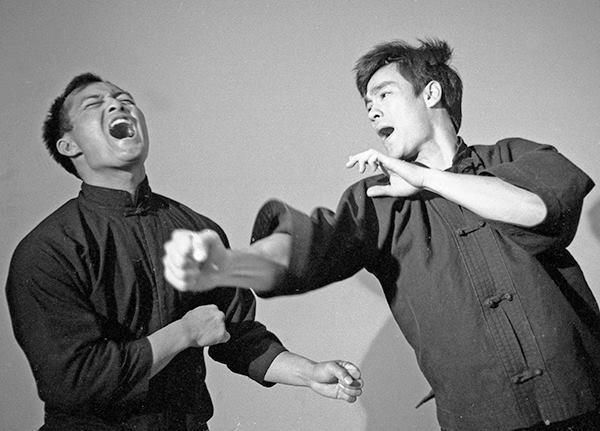
It was so chaotic, but we learned so much. We learned that you can use a seat or the steering wheel to secure a position or help move to a different location. And when you’re pushed against the inside of a door in a tight space, you’ll have a trapped limb. How do you move, defend, and attack when one of your arms, or an arm and leg are pinned against a seat or door? It’s an art form to fight in the back of a vehicle (laughs).
You’ve been involved in the martial arts for almost 75 years and have studied such a broad range of martial arts and fighting systems. What do you think is the value of martial arts training for people in today’s society?
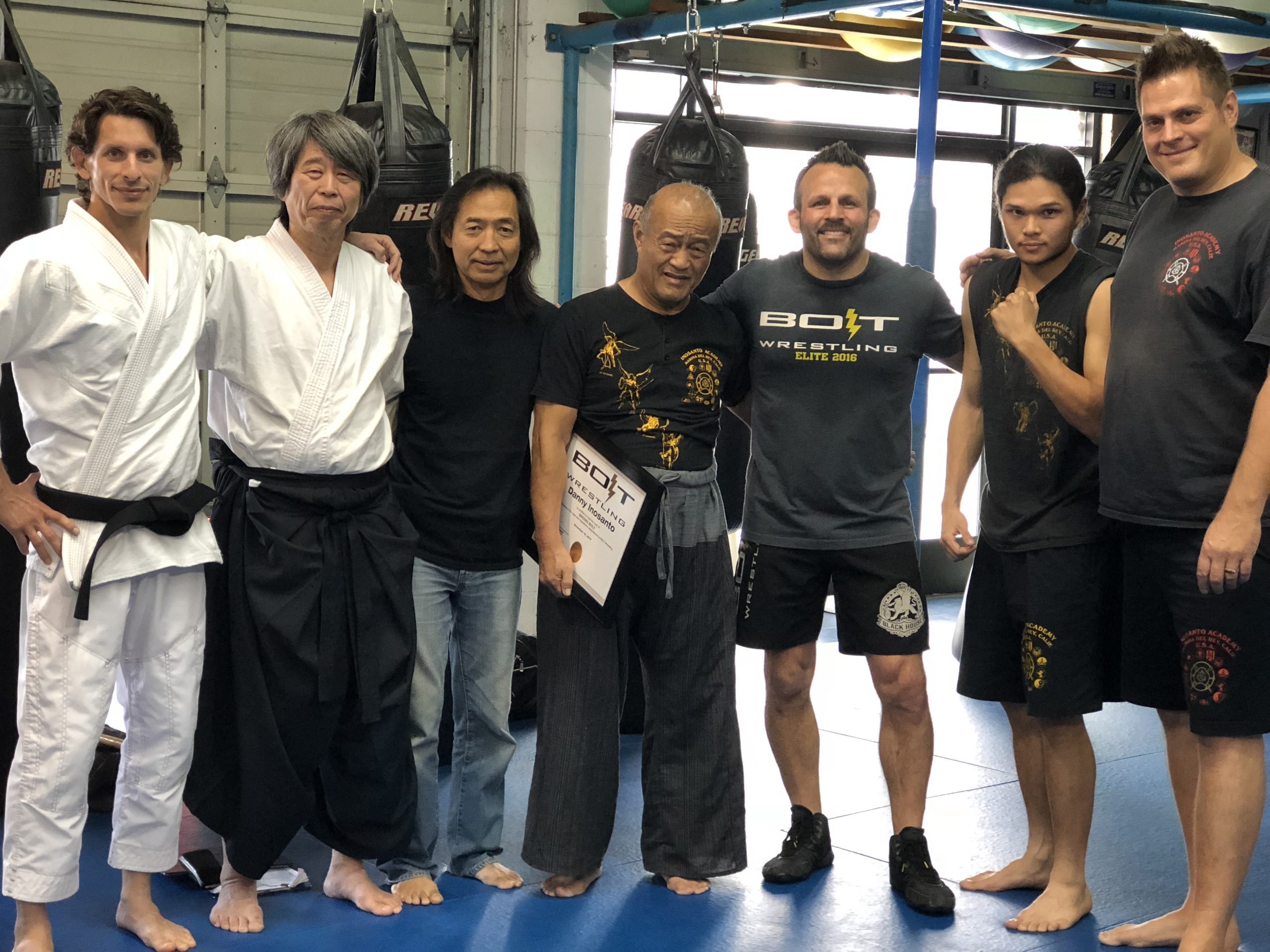
For me, martial arts is really about bringing people together. I learn the culture of a country through the martial arts. When I study a Korean art, I learn something about Korea. When I study a Japanese martial art, I’m learning about the history and culture of the Japanese. Learning about other people and other cultures brings people together, and creates greater understanding among people.
And as a physical activity – a health and wellbeing system, nothing can beat the martial arts. If you play football, you’ve got a limited number of years to practice. If you do martial arts, you can start at five years old and keep studying all the way until they close the coffin at 80, 90, 100 years old. It’s a system of education that builds physical attributes like strength, agility, flexibility, awareness, speed, accuracy of movement. Then it builds other attributes too, like awareness, respect, humility, perseverance, and compassion.
And then there’s this amazing dynamic element to a lifelong martial arts practice. As your body changes, you need to adapt your practice, but the systems allow you to do that in a way that the training is never boring. That can’t be said for every kind of activity.
For example, I practice Brazilian jiu-jitsu. I love my practice in that art. I started at 59 and never stopped, until this pandemic got in the way. It stopped when I hit 83, but it will restart again soon. And I didn’t start Aikido until I was in my late 70’s. You can always modify practice in a way that’s meaningful to you. My BJJ instructors, the Machados, were so understanding and flexible with my training.
I find that the need to adapt my training over time keeps my mind and spirit flexible – ready to adapt to new situations.
That provides a nice transition to another topic I wanted to discuss with you, which is adaptability. Most would say that adaptive capacity is something all martial artists should try to embody. When you look at the pandemic, how have you adapted to this challenge, or more accurately, crisis, for the entire martial arts community?
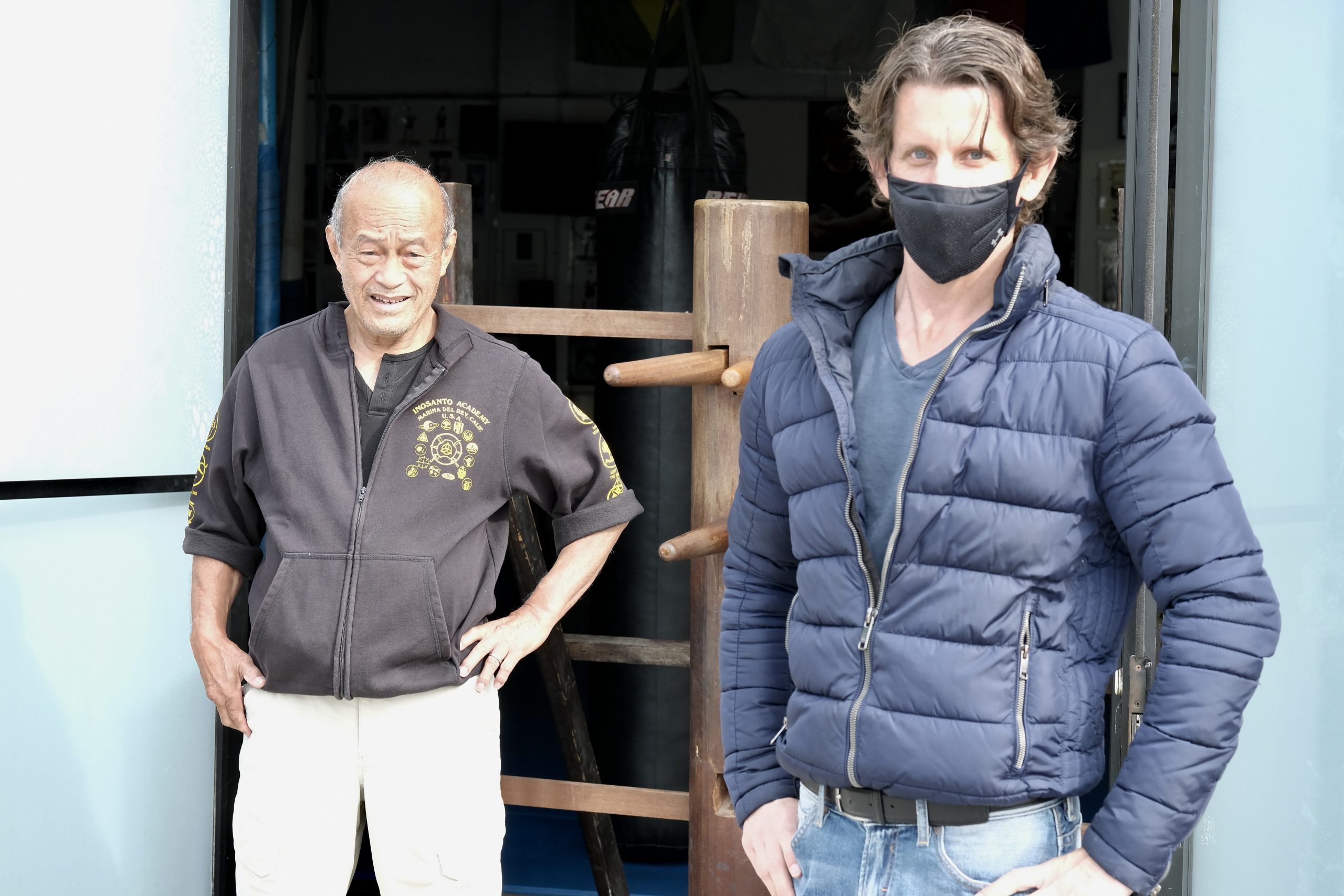
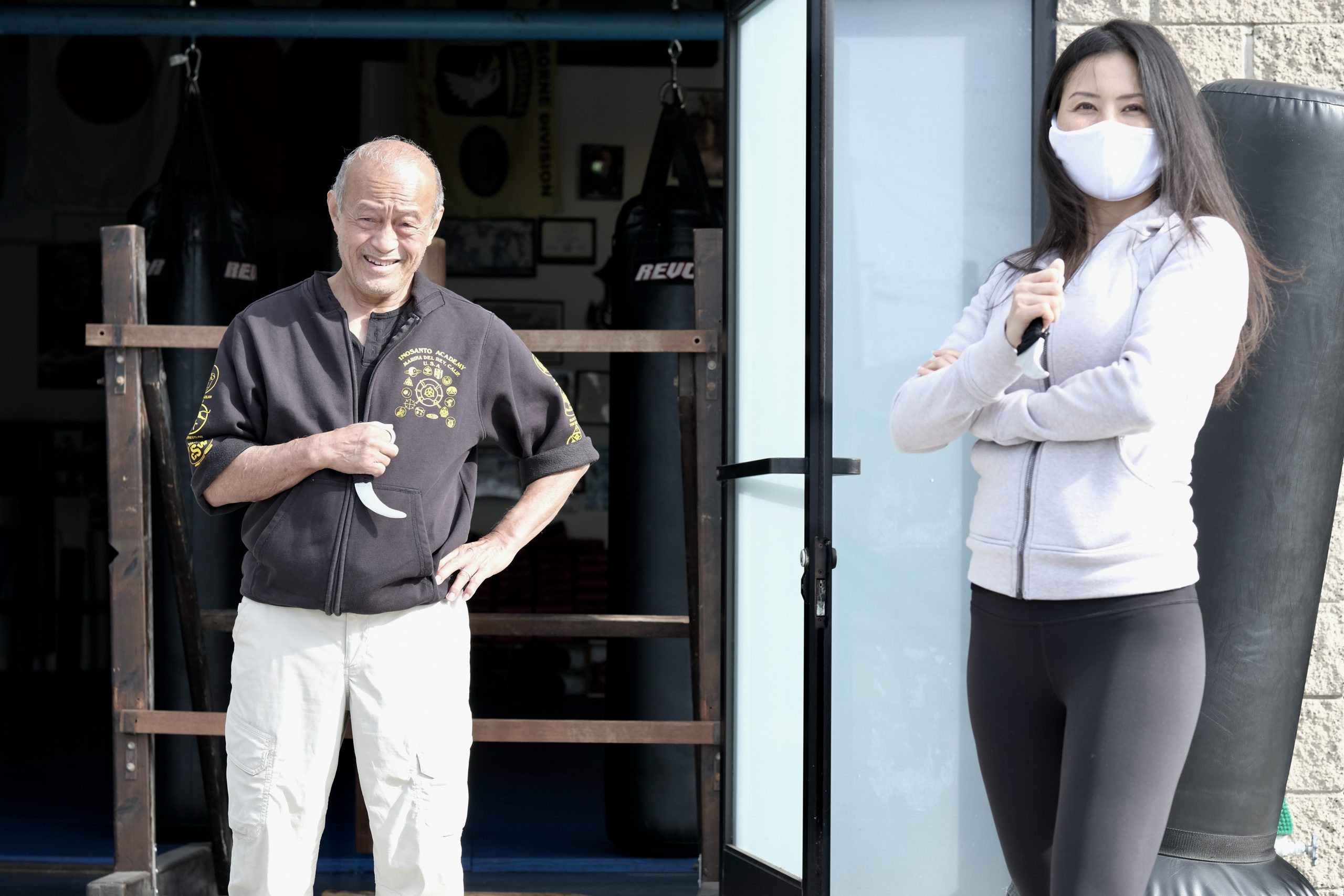
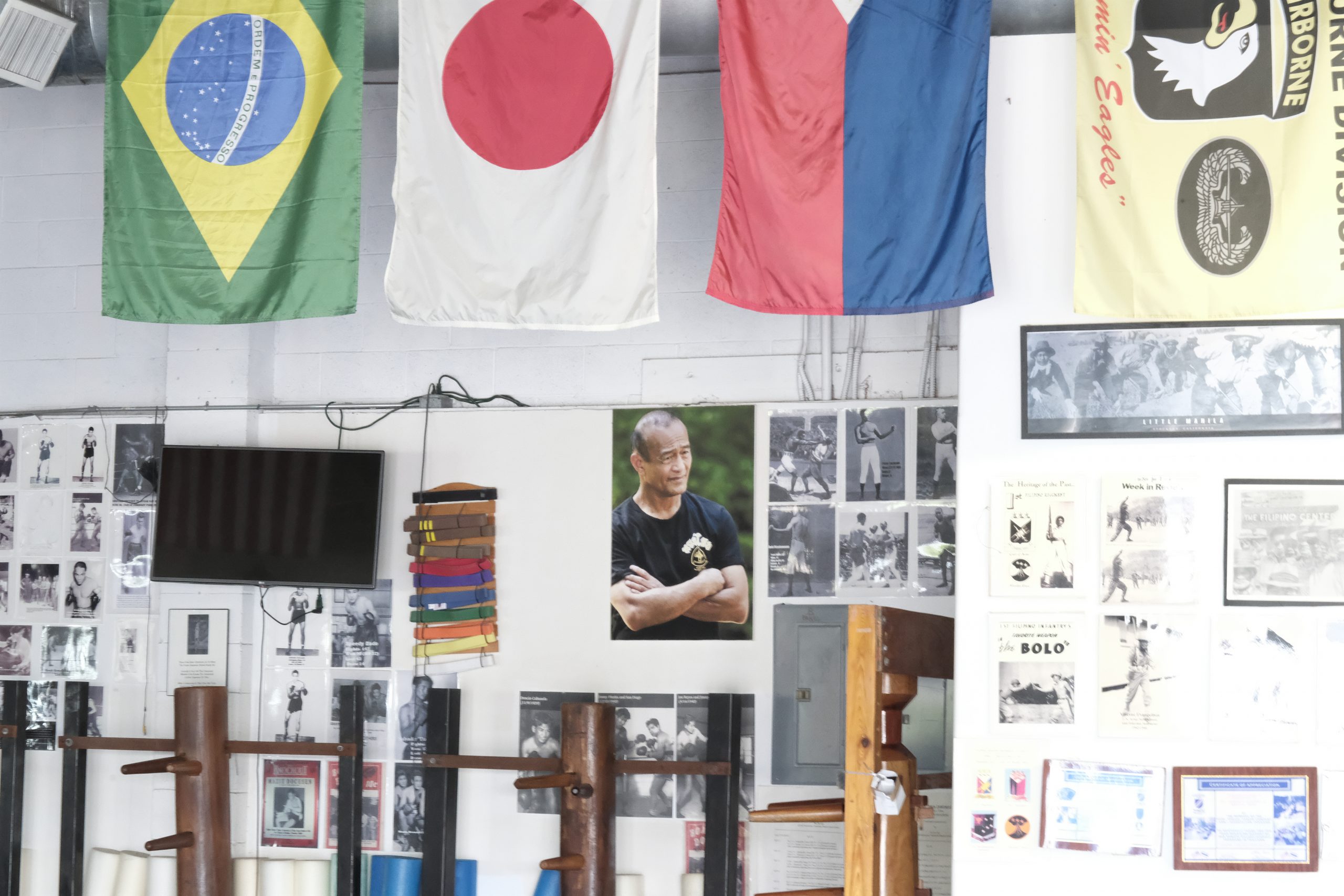
I had to rethink everything at the Inosanto Academy. We have to keep six feet away, wear masks, and be outside. So the pandemic has not been good for me. I really dislike it. Now I teach a lot of long range stick fighting. I’ve focused a lot on staff. I started teaching everything I learned from the Japanese systems, the Chinese systems, the Korean systems, the Filipino systems, and the Indian systems. I also draw from Thai weaponry. I’m glad I have such broad exposure to these different weapons systems. So I can stick with long range weapons and still go really broad or really deep in different areas. We’re able to do some empty handed work too. I teach trapping hands, but use a pole that’s about 6 feet long. They do trapping on the pole as a way of representing the arms. I also use Wing Chun dummies, but we have to disinfect the dummy every time as people take turns. We try to be creative.
Many people consider the founder of Aikido as an innovator and in a way, a bit of a renegade or rule breaker. Many say the same thing about Bruce Lee. How did Bruce think about innovation within the martial arts?
Bruce did so much research on different marital arts. He believed that if you want to innovate, you have to know what’s already out there. What are the strengths and weaknesses of different systems? How do other arts do things, and why? This is what Bruce Lee taught me. He told me that you want to research, you want to experiment, then you want to develop something for you, and finally you have to develop something that will work for the majority of your students, because what works for one individual may not work for another individual.
Can you tell me a short story about Bruce Lee? Perhaps a memorable event for you?
Well, I think one of the most memorable moments with him was on my 27th or 28th birthday. We had just finished a workout and he said, “let’s spar just a little bit more.” And I remember him hitting me in the liver. I went down so fast. I couldn’t do anything but gasp for air, and Bruce just started to laugh. And at the time, I thought, “What a sick sense of humor!” But I realized he wasn’t laughing at my pain, just at the entire situation. Anyway, while I’m on the floor curled into a ball, he brings in a birthday cake. And as I’m gasping for air on the ground, he sings Happy Birthday to me. And that was especially memorable because it turns out that singing was not one of his most distinguishing talents (laughs).
Is there one thing you found that is commonly misunderstood or misrepresented about Bruce?
Well, I think for all the people that love Bruce Lee, there are many who are envious of him, or don’t like him. It’s really funny. You can’t please everybody. It’s not just Aikido – even Bruce Lee has been the target of MMA type criticisms on the Internet. Some say, “Well, he was never in a real mixed martial arts match, so you can’t say his skill is good.” So it’s stuff like that.
How would Bruce Lee perform in an MMA ring? I believe he would do well, but we’ll never really know. But in a way, he was one of the early innovators in mixed martial arts. He drew techniques and tactics from all the arts. We wouldn’t criticize a World War 1 fighter ace for never shooting down a jet fighter because jets didn’t exist in that era. Whether in the martial arts, science, education, or military, we should afford more respect to our predecessors. They are the giants upon whose shoulders we stand today.
Do you have any parting advice or things you’d like to share with our readers?
Be kind, be courteous and respectful, and avoid negative people because they’re really not good for the soul. Eat as healthy as possible, take care of your body and mind, and learn to adapt. Find your place in this world and seek connection with your spirituality – whatever form that may take.